

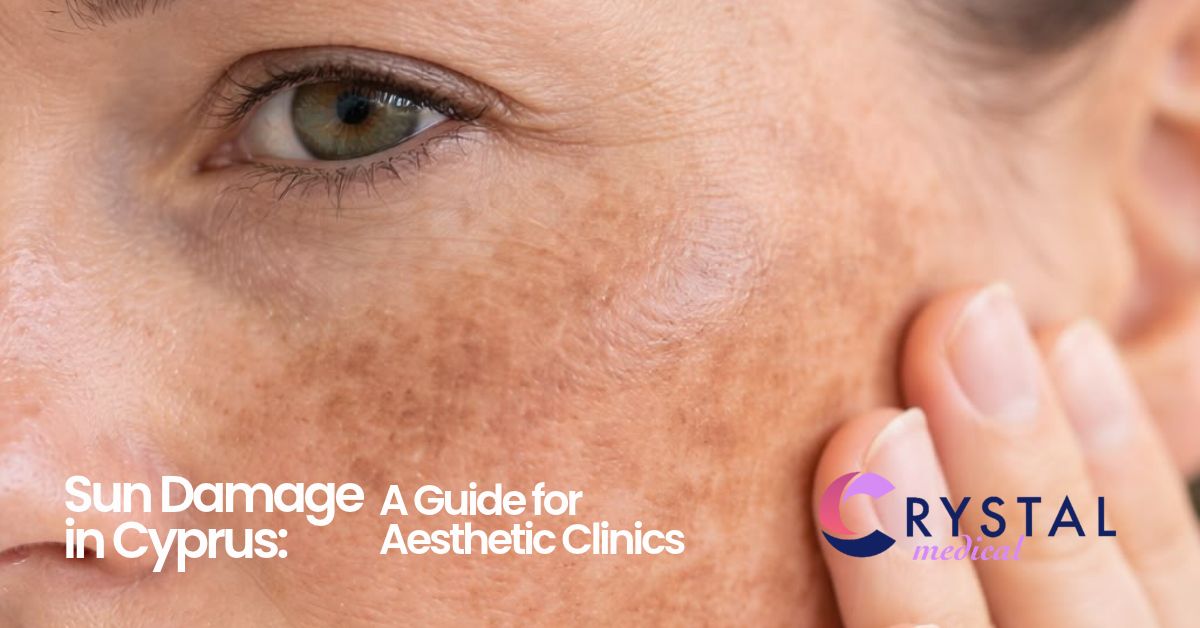
Sun Damage in Cyprus: What Aesthetic Clinics Should Know About Pigmentation
Living in Cyprus means enjoying sunshine for much of the year. However, the island’s Mediterranean climate also brings a challenge for skin health: prolonged exposure to ultraviolet (UV) radiation. For aesthetic clinics, sun damage in Cyprus is an important factor when assessing pigmentation concerns and planning laser treatments. From sun spots and melasma to post-inflammatory hyperpigmentation, different skin conditions require different approaches.
Understanding how sun exposure affects pigmentation, identifying the type of discoloration, and carefully evaluating each patient’s skin are essential steps toward safe and effective aesthetic treatments.
Why Cyprus’s Climate Matters for Skin Pigmentation
Cyprus experiences long, hot summers, mild winters, and abundant sunshine throughout the year. According to the country’s official tourism information, the island receives an average of approximately 11.5 hours of bright sunshine per day during the six summer months.
While sunshine is part of everyday life in Cyprus, repeated UV exposure can gradually affect the skin.
UV radiation stimulates melanocytes, the cells responsible for producing melanin. Melanin helps protect the skin from UV damage, but excessive or uneven production can lead to visible pigmentation changes.
Over time, prolonged sun exposure may contribute to:
- Dark spots and uneven skin tone
- Premature skin ageing and changes in skin texture
- More noticeable freckles and sun spots
- Worsening of existing pigmentation conditions
- Increased risk of certain skin cancers
Importantly, sun damage does not occur only during summer. UV exposure remains relevant throughout the year, making consistent sun protection especially important for people living in Cyprus.
For aesthetic professionals, understanding a patient’s lifestyle, outdoor activities, and sun exposure habits can provide valuable information before recommending any pigmentation treatment.
Common Types of Pigmentation Seen in Aesthetic Clinics
Not all dark spots are caused by the same process. Although different pigmentation conditions may look similar, their underlying causes and responses to treatment can vary significantly.
1. Solar Lentigines (Sun Spots)
Solar lentigines are flat, brown spots that typically develop after years of cumulative UV exposure.
They commonly appear on areas frequently exposed to sunlight, including the face, hands, shoulders, and décolletage.
Unlike freckles, which may become lighter when sun exposure decreases, solar lentigines tend to persist.
What clinics should know:
Certain pigment-targeting laser treatments may help improve the appearance of appropriately diagnosed solar lentigines. However, suspicious or changing pigmented lesions must be evaluated by a dermatologist before any cosmetic treatment.
2. Melasma
Melasma is a complex pigmentation condition characterized by brown or grey-brown patches, commonly appearing on the cheeks, forehead, upper lip, and other facial areas.
Unlike ordinary sun spots, melasma is influenced by several factors, including:
- UV radiation and visible light
- Hormonal changes
- Genetic predisposition
- Pregnancy or hormonal medication
- Other individual triggers
In sunny climates such as Cyprus, managing melasma can be particularly challenging because ongoing light exposure may contribute to recurrence.
What clinics should know:
Melasma requires a cautious, individualized approach. Laser treatment is not always the first choice and can sometimes worsen pigmentation or trigger post-inflammatory hyperpigmentation.
A comprehensive treatment strategy may involve topical skincare, strict photoprotection, and carefully selected procedures when clinically appropriate.
3. Post-Inflammatory Hyperpigmentation (PIH)
Post-inflammatory hyperpigmentation occurs when the skin produces excess pigment following inflammation or injury.
Common triggers include acne, eczema, burns, irritation, and certain aesthetic procedures.
PIH can affect all skin tones, although individuals with darker skin phototypes may be more susceptible.
Sun exposure can make existing marks darker and more persistent.
What clinics should know:
Aggressive treatments can sometimes worsen PIH rather than improve it. Clinics should assess the patient’s skin type, previous reactions, and the cause of inflammation before considering laser treatment.
In many cases, controlling the underlying inflammation and using appropriate topical treatments should come before energy-based procedures.
Why Skin Assessment Is Essential Before Laser Treatments
Modern laser technologies offer valuable possibilities for treating selected pigmentation concerns. However, successful treatment begins long before the device is switched on.
A dark spot on the skin does not automatically mean that laser treatment is appropriate.
Before planning a procedure, qualified practitioners should consider several important factors.
Identify the Type of Pigmentation
Different pigmentation disorders require different treatment strategies.
For example, a confirmed solar lentigo may respond to pigment-targeting laser technology, while melasma may require a more conservative approach.
Pigmented lesions that are new, changing, irregular, or otherwise suspicious should be referred for medical evaluation rather than treated cosmetically.
Evaluate the Patient’s Skin Phototype
The Fitzpatrick skin phototype classification helps practitioners understand how skin typically responds to UV exposure.
Patients with higher skin phototypes may have an increased risk of pigmentation changes following certain laser procedures.
Consequently, device selection and treatment parameters must be adapted to individual skin characteristics.
Consider Recent Sun Exposure
Recent tanning or sunburn can increase the risk of complications during laser treatment.
This is particularly relevant in Cyprus, where patients may spend considerable time outdoors throughout the year.
Clinics should ask about recent holidays, beach activities, outdoor sports, and tanning habits before scheduling treatment.
When necessary, procedures should be postponed until the skin is suitable for treatment.
Review Medical History and Previous Treatments
A thorough consultation should also consider medications, photosensitivity, active skin conditions, previous aesthetic procedures, and any history of abnormal pigmentation or scarring.
This information helps practitioners identify potential contraindications and establish realistic treatment expectations.
The Role of Laser Technology in Pigmentation Management
Advancements in aesthetic laser technology have expanded the treatment options available for selected pigmentation concerns.
Pigment-targeting lasers work by delivering controlled energy that interacts with melanin in the skin.
However, treatment outcomes depend on multiple factors, including the type and depth of pigmentation, skin phototype, device characteristics, and the practitioner’s expertise.
Candela PicoWay Technology
Candela’s PicoWay system uses picosecond laser technology to deliver extremely short pulses of energy.
Its photoacoustic mechanism allows the treatment of certain pigmented targets while limiting unnecessary thermal exposure compared with some longer-pulse approaches.
Depending on the indication, wavelength, and applicable regulatory clearance, PicoWay technology may be used for selected benign pigmented lesions and other aesthetic concerns.
Nevertheless, not every pigmentation condition is suitable for laser treatment.
Conditions such as melasma require particular caution, and the use of advanced technology does not eliminate the possibility of post-inflammatory hyperpigmentation, recurrence, or other adverse effects.
For aesthetic clinics, choosing appropriate technology is only one part of delivering responsible treatment. Accurate diagnosis, professional training, and patient selection remain equally important.
Why Aftercare and Sun Protection Matter
Even when a pigmentation treatment is performed successfully, continued UV exposure may contribute to new pigmentation or recurrence.
Therefore, patient education should be part of every treatment plan.
Clinics should emphasize the importance of:
- Daily broad-spectrum sunscreen with SPF 30 or higher, with SPF 50+ often preferable for pigmentation-prone skin
- Reapplying sunscreen regularly, particularly during outdoor activities
- Avoiding direct sun exposure during peak UV hours
- Wearing protective clothing, hats, and sunglasses
- Following the practitioner’s specific post-treatment instructions
- Avoiding unnecessary irritation while the skin recovers
For patients with melasma, tinted sunscreen containing iron oxides may provide additional protection against visible light, which can contribute to pigmentation.
In Cyprus, where outdoor activities are common throughout much of the year, long-term photoprotection is particularly important.
Clinics should also explain that pigmentation treatment is not necessarily permanent. Even after visible improvement, ongoing maintenance and sun protection may be required.
Building Patient Trust Through Responsible Treatment Planning
Patients often seek aesthetic treatments because they want to reduce dark spots and achieve a more even skin tone.
However, managing expectations is an important part of professional care.
Not every pigmentation concern can be eliminated completely, and some conditions require long-term management rather than a single treatment.
A responsible clinic should communicate:
- What type of pigmentation has been identified
- Whether laser treatment is appropriate
- What level of improvement may realistically be expected
- Which risks or side effects are possible
- How sun exposure may affect the outcome
- Whether additional treatments or ongoing maintenance may be necessary
By prioritizing patient assessment and education, aesthetic clinics can build stronger relationships based on transparency and professional expertise.
Supporting Aesthetic Clinics in Cyprus with Advanced Technology
At Crystal Medical, we understand the importance of reliable technology, professional knowledge, and ongoing technical support in modern aesthetic practice.
As a distributor of Candela laser systems in Cyprus, we support aesthetic clinics and medical professionals with advanced equipment, installation, technical assistance, and maintenance services.
Our goal is to help clinics work with dependable technology while maintaining high professional standards.
Whether a clinic is exploring new laser technologies or looking to expand its aesthetic services, understanding the specific needs of its patients and the local environment is an important part of making informed equipment decisions.
Conclusion
Sun damage in Cyprus presents ongoing challenges for aesthetic clinics, particularly when managing pigmentation concerns.
Although sun spots, melasma, and post-inflammatory hyperpigmentation may appear similar, they require different assessment and management strategies.
Laser technology can offer effective options for certain conditions, but careful patient selection, appropriate treatment planning, and consistent sun protection remain essential.
For clinics operating in Cyprus, combining professional expertise with suitable technology and patient education is key to delivering responsible aesthetic care.
Interested in advanced Candela laser technology for your clinic?
Contact Crystal Medical to learn more about our available laser systems, technical support, and equipment solutions for aesthetic professionals in Cyprus.