

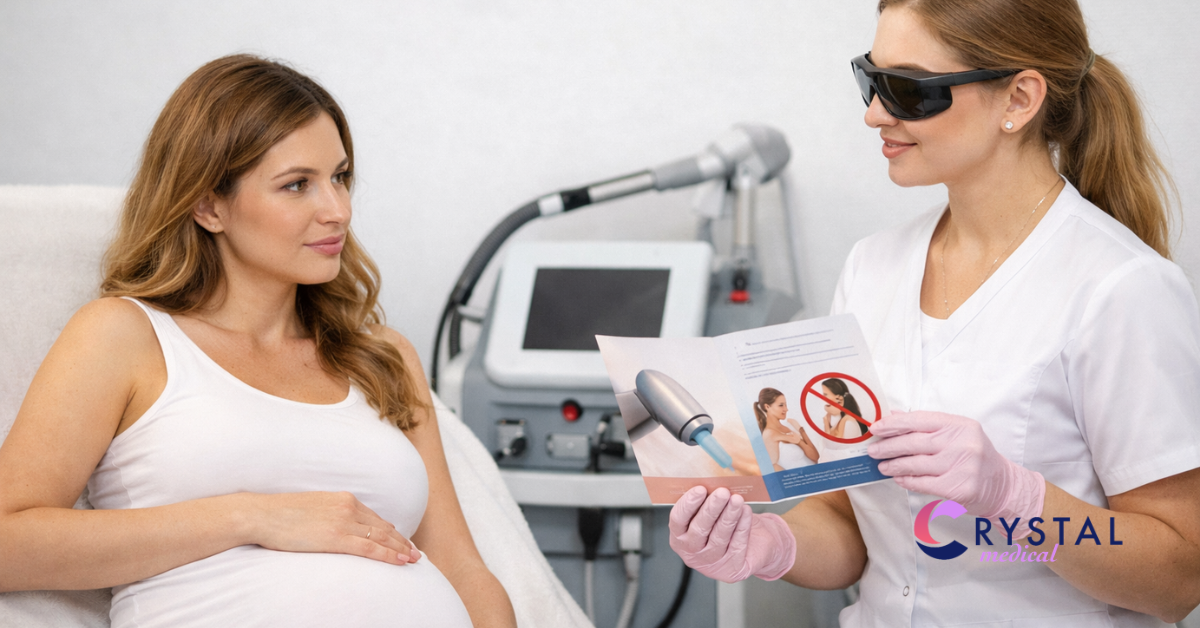
Laser Hair Removal During Pregnancy: What Clinics Should Know
Laser Hair Removal During Pregnancy is a common topic among clients visiting aesthetic clinics. Many women want to continue their treatments, but safety always comes first.
Although laser technology is advanced and widely used, pregnancy introduces factors that require extra caution. Clinics must understand when to proceed, when to pause treatments, and how to communicate this clearly to clients.
Is Laser Hair Removal During Pregnancy Safe?
There is no strong clinical evidence proving that laser hair removal is harmful during pregnancy. However, there is also no clear evidence confirming it is completely safe.
Because of this uncertainty, most professionals recommend avoiding Laser Hair Removal During Pregnancy as a precaution.
Why treatments are not recommended:
- Lack of clinical studies involving pregnant clients
- Hormonal changes increasing skin sensitivity
- Higher risk of pigmentation (melasma)
- Ethical responsibility to avoid unnecessary risks
For clinics, the safest approach is simple: postpone treatments until after pregnancy.
Laser Hair Removal During Pregnancy and Hormonal Changes
Pregnancy significantly affects hormone levels, which can impact both the skin and hair growth cycle.
Clients may experience:
- Increased or unexpected hair growth
- Faster regrowth between sessions
- Changes in hair thickness
Since laser hair removal works best during the anagen (growth) phase, these hormonal shifts can reduce treatment effectiveness.
👉 This means results may be inconsistent, even if the treatment is performed.
What About Breastfeeding Clients?
Breastfeeding clients are generally considered safer candidates for laser hair removal. However, clinics should still take precautions:
- Avoid treating the breast area
- Monitor skin sensitivity
- Inform clients that results may vary due to hormones
Clear communication is key. Setting realistic expectations helps maintain trust.
Best Practices for Clinics
To ensure safety and professionalism, clinics should follow these guidelines:
1. Always Ask About Pregnancy
Include pregnancy and breastfeeding questions in every consultation.
2. Prioritize Safety Over Treatment
If a client is pregnant, recommend postponing the procedure.
3. Educate Clients Clearly
Explain why waiting is the safest option and how it benefits long-term results.
4. Use Advanced Technology Responsibly
Devices like Candela systems are designed for precision and safety, but technology should always be paired with professional judgment.
When Can Treatments Resume?
Clients can usually return to treatments:
- After pregnancy
- Once hormones stabilize
- When skin sensitivity returns to normal
For breastfeeding clients, treatments may resume earlier, excluding sensitive areas.
Conclusion
Laser Hair Removal During Pregnancy should be approached with caution. While there is no confirmed risk, the lack of research and hormonal changes make it best to delay treatments.
By prioritizing safety, educating clients, and maintaining transparency, clinics can build trust and deliver better long-term results.
At Crystal Medical, we support clinics with advanced technology and expert knowledge—helping you provide treatments that are both effective and safe.