

Why the Cheapest Laser Isn’t Always the Most Profitable
Laser equipment profitability is one of the most important factors aesthetic clinic owners should consider before investing in new technology. While choosing a cheaper laser may seem like a smart way to reduce initial expenses, the purchase price tells only part of the story. Reliability, maintenance costs, treatment efficiency, and long-term operating expenses all influence how profitable a laser device will be over time.
However, laser equipment profitability depends on much more than the initial purchase price. Reliability, maintenance requirements, treatment efficiency, and long-term operating costs all influence how much revenue a device can generate throughout its lifespan.
For aesthetic clinics in Cyprus, where competition is strong and client expectations are high, understanding the true cost of laser ownership is essential for making a sustainable investment.
1. Purchase Price vs. Total Cost of Ownership
When comparing laser devices, the initial purchase price is often the first factor clinic owners consider. However, the price displayed on a quotation represents only part of the investment.
The total cost of ownership (TCO) includes all expenses associated with purchasing, operating, and maintaining a laser system throughout its useful life.
These may include:
- Initial equipment cost: The purchase price, installation, and initial training.
- Maintenance and servicing: Preventive maintenance, technical inspections, and repairs.
- Consumables: Replacement parts and treatment-related materials.
- Energy consumption: Electricity required to operate the equipment.
- Staff training: Time and resources needed to train operators.
- Equipment downtime: Potential revenue lost when the device is unavailable.
- Technology upgrades: Additional expenses required to maintain or expand treatment capabilities.
A less expensive laser may require more frequent servicing or replacement parts, potentially increasing its total operating cost.
The key question is not simply how much a laser costs to purchase, but how much it costs to own and operate over time.
2. Reliability Directly Affects Clinic Revenue
Reliability is one of the most important factors influencing laser equipment profitability.
When a laser device experiences technical problems, the consequences extend beyond repair expenses.
Unexpected downtime can result in:
- Cancelled or rescheduled appointments.
- Lost treatment revenue.
- Disruptions to staff schedules.
- Reduced client satisfaction.
- Additional administrative work.
- Potential damage to the clinic’s reputation.
Consider a clinic performing eight laser treatments per day at an average price of €80 per session.
If the equipment becomes unavailable for three fully booked working days, the clinic could face up to €1,920 in disrupted appointment revenue.
Although some appointments may be rescheduled and recovered, unexpected downtime still creates operational challenges and potential financial losses.
Investing in reliable equipment, supported by qualified technicians and accessible servicing, can help reduce these risks.
3. Maintenance Costs: The Hidden Expense of Laser Ownership
Every professional laser system requires appropriate maintenance to operate safely and consistently.
However, maintenance requirements, service arrangements, replacement-part costs, and technical support availability can differ considerably between manufacturers and suppliers.
Before purchasing a laser device, clinic owners should ask:
- How frequently does the equipment require preventive maintenance?
- What is included in the warranty?
- Are replacement parts readily available?
- Is technical assistance available locally?
- What are the typical costs of servicing and repairs?
- Is an annual maintenance contract available?
A lower purchase price may become less attractive if technical support is difficult to access or replacement components are expensive.
Why Preventive Maintenance Matters
Regular preventive maintenance can help identify potential technical issues before they lead to more serious equipment failures.
It also supports consistent device performance, operational reliability, and compliance with manufacturer recommendations.
At Crystal Medical, we understand the importance of keeping aesthetic equipment operating efficiently.
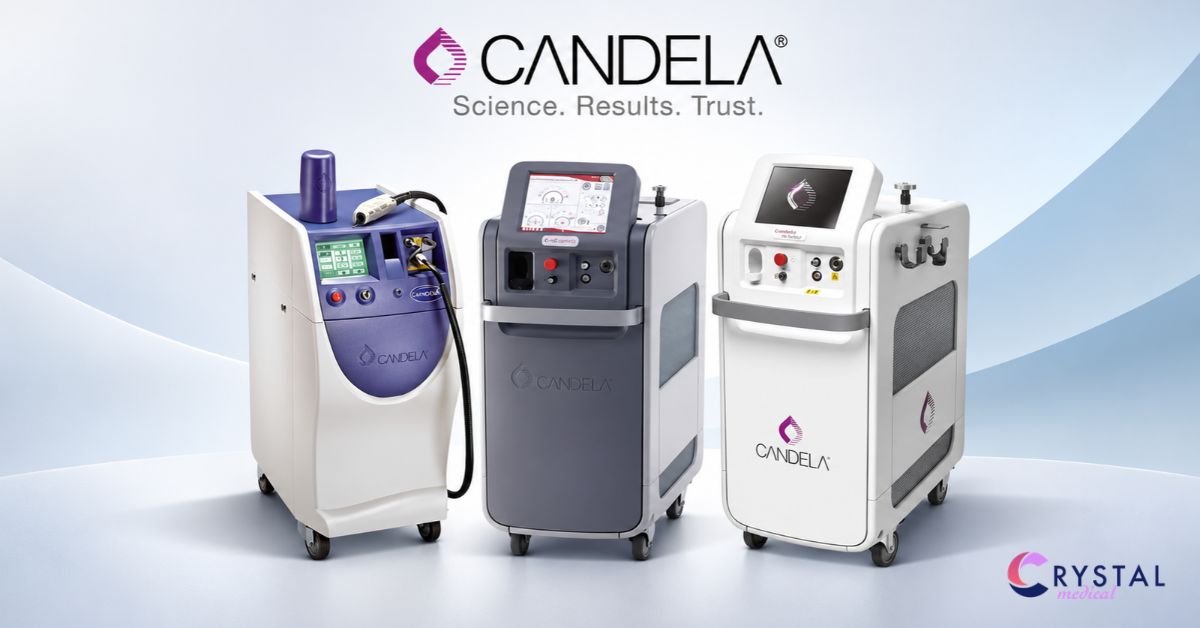
As a distributor of Candela laser systems in Cyprus, we provide installation, technical assistance, repairs, and preventive maintenance services, including annual technical assistance contracts.
Our goal is to help clinics protect their equipment investment and minimize avoidable operational disruptions.
4. Treatment Efficiency Can Make a Significant Difference
The profitability of laser equipment also depends on how efficiently clinics can perform treatments.
Two devices may offer similar treatment categories but differ in their operating speed, available spot sizes, cooling systems, and workflow requirements.
These differences can influence appointment duration and the number of clients a clinic can accommodate.
For example, a device that allows treatments to be completed more efficiently may help a busy clinic increase its daily appointment capacity.
Example: How Treatment Time Affects Revenue Potential
Imagine two laser devices used for the same type of treatment:
| Factor | Laser A | Laser B |
|---|---|---|
| Purchase price | €25,000 | €45,000 |
| Average appointment duration | 40 minutes | 25 minutes |
| Treatment price | €80 | €80 |
| Appointments in a 6-hour treatment window | 9 | 14 |
| Maximum daily treatment revenue | €720 | €1,120 |
Illustrative example only. Prices, treatment durations, and capacity are hypothetical and do not represent specific manufacturers or devices. Actual results depend on treatment protocols, staffing, demand, and clinical considerations.
In this scenario, Laser B offers the potential for €400 more daily revenue when the additional appointment capacity is fully utilized.
Over 20 working days, that represents up to €8,000 in additional monthly gross revenue potential.
However, higher capacity does not automatically guarantee higher profitability. The clinic must have sufficient demand, and additional operating costs must also be considered.
The example demonstrates why treatment efficiency should be evaluated alongside equipment price rather than treated as a secondary consideration.
5. Versatility Can Create Additional Revenue Opportunities
Another important consideration is the range of treatments a laser system can support.
Some devices are designed primarily for a specific application, while others offer multiple treatment capabilities.
Depending on the technology, indications, and available configurations, a versatile system may allow clinics to expand their service portfolio without purchasing several separate devices.
For example, the Candela GentleMax Pro Plus combines two wavelengths:
- 755 nm Alexandrite: Used for laser hair removal and selected dermatological applications.
- 1064 nm Nd:YAG: Supports hair removal across a broader range of skin types and additional indicated applications.
This dual-wavelength technology allows practitioners to select appropriate settings for different treatment requirements, within the device’s approved indications and according to professional assessment.
For clinics considering service expansion, investing in a versatile system may offer greater long-term value than purchasing equipment based solely on the lowest available price.
However, additional capabilities generate revenue only when the clinic has the expertise, client demand, and appropriate protocols to use them.
6. Technical Support Is Part of the Investment
Even high-quality laser equipment can occasionally require technical assistance.
The difference often lies in how quickly and effectively a problem can be addressed.
When evaluating suppliers, clinic owners should consider the availability of:
- Local technical support.
- Professional installation and operator training.
- Preventive maintenance services.
- Repair assistance.
- Replacement parts.
- Ongoing communication after purchase.
Working with a supplier that provides technical support can make equipment ownership more predictable and help reduce the operational impact of technical issues.
For clinics in Cyprus, local service availability is particularly valuable because waiting for international assistance or replacement components may extend equipment downtime.
At Crystal Medical, our relationship with clinics continues beyond equipment delivery. We provide ongoing technical assistance to support the operation and maintenance of the systems we distribute.
7. How to Calculate the Real Profitability of a Laser Device
Before investing in laser technology, clinic owners should estimate the potential financial return using realistic operating assumptions.
A useful starting point is to calculate the expected monthly contribution generated by the equipment.
Step 1: Estimate monthly treatment revenue
Monthly treatment revenue = Number of treatments × Average treatment price
Step 2: Calculate monthly operating expenses
Include consumables, maintenance provisions, equipment-related energy costs, additional staffing costs, and other relevant operating expenses.
Step 3: Estimate monthly operating contribution
Monthly operating contribution = Treatment revenue − Incremental operating expenses
Step 4: Calculate the approximate payback period
Payback period = Initial investment ÷ Monthly operating contribution
For example:
- Initial equipment investment: €40,000
- Monthly treatment revenue: €8,000
- Monthly incremental operating expenses: €3,000
- Monthly operating contribution: €5,000
The estimated payback period would be:
€40,000 ÷ €5,000 = 8 months
This is a simplified illustration, not a guaranteed financial outcome. It assumes stable demand and excludes factors such as financing costs, taxes, changes in utilization, and any additional initial investments not included in the equipment price.
For a more accurate assessment, clinics should also calculate ROI over several years and consider different scenarios for appointment demand and operating costs.
8. Questions to Ask Before Purchasing Laser Equipment
Before making a final decision, clinic owners should evaluate both the technical and financial aspects of their investment.
Consider the following questions:
- What is the total cost of ownership over the next five years?
- How reliable is the equipment, and what service support is available?
- What are the expected maintenance and consumable costs?
- How efficiently can the device perform the treatments my clinic offers?
- Does the technology support my clinic’s current and future services?
- How many treatments will I realistically perform each month?
- What is the estimated payback period under conservative assumptions?
- Will the supplier provide ongoing technical assistance after installation?
Taking the time to answer these questions can help clinic owners avoid costly purchasing decisions and select equipment that supports their long-term business objectives.
Conclusion: Think Beyond the Price Tag
Choosing laser equipment should never be based on purchase price alone.
While a lower-cost device may reduce the initial financial commitment, factors such as reliability, treatment efficiency, maintenance requirements, and technical support can have a greater influence on long-term profitability.
For aesthetic clinics, the most valuable investment is not necessarily the cheapest or most expensive device. It is the system that offers the right balance of performance, operating costs, clinical suitability, and revenue potential.
At Crystal Medical, we help aesthetic professionals in Cyprus explore Candela laser technologies and understand the importance of reliable equipment and ongoing technical support.
Whether you are opening a new clinic, upgrading existing equipment, or expanding your treatment portfolio, our team can help you explore suitable solutions for your business.
Contact Crystal Medical to learn more about our Candela laser systems, installation services, and technical support in Cyprus.